
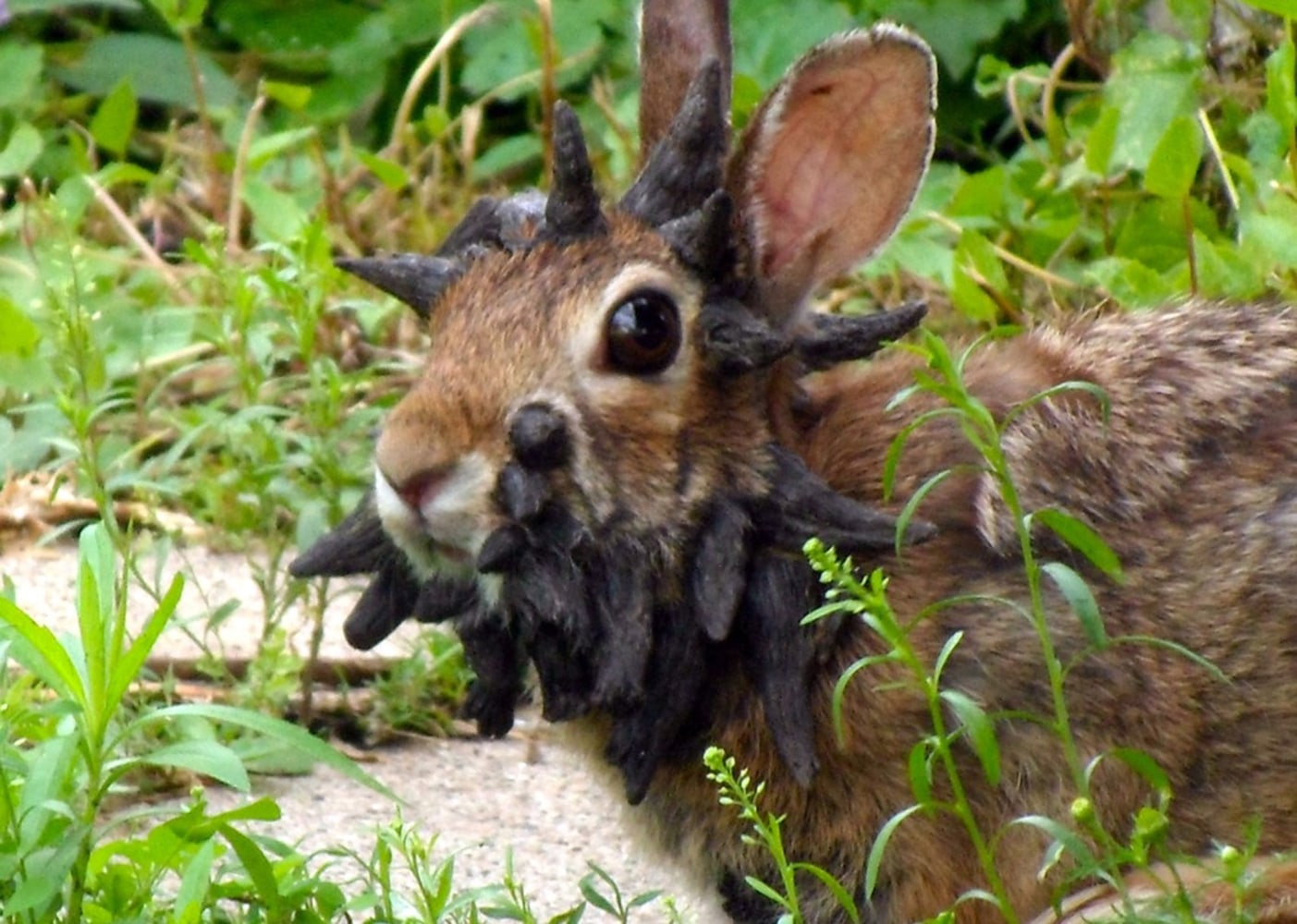
Colorado’s wild rabbit population is facing a rather unsettling phenomenon: the emergence of “Frankenstein Rabbits.” These creatures, afflicted with noticeable growths, have sparked curiosity and concern. But what’s causing these strange developments? The culprit is a virus, and while alarming in appearance, experts assure that it poses no threat to humans.
Table of Contents
Understanding the “Frankenstein Rabbits” Phenomenon
The term “Frankenstein Rabbits,” as reported by sources like People.com, Bored Panda, and others, refers to wild rabbits in Colorado exhibiting unusual growths. These growths, often black and horn-like or tentacle-like, primarily appear on the rabbits’ faces and heads, giving them a distinctly peculiar appearance. The attention-grabbing nature of these rabbits has led to widespread media coverage, highlighting the visual strangeness of the condition. The spread of the story across platforms like TikTok and LADbible demonstrates the public’s fascination with the unusual.
The Culprit: Cottontail Rabbit Papillomavirus (CRPV)
The cause behind the “Frankenstein Rabbits” is the cottontail rabbit papillomavirus (CRPV), also known as Shope papilloma virus. This viral infection is responsible for the development of the aforementioned growths. According to Colorado Parks and Wildlife (CPW), the virus is specific to rabbits, meaning it does not affect humans or other animal species. This specificity is crucial in understanding the limited scope of the outbreak. The growths are a direct manifestation of the virus’s impact on the rabbit’s skin cells, causing them to proliferate abnormally.
How the Virus Spreads
The cottontail rabbit papillomavirus typically spreads during the warmer months, primarily through the bites of insects such as fleas and ticks. These insects act as vectors, transmitting the virus from one rabbit to another. The increased activity of these insects during warmer weather contributes to the heightened transmission rate during these periods. Understanding the transmission mechanism is key to potentially mitigating the spread of the virus within the rabbit population.
Impact on Infected Rabbits
While the growths caused by CRPV may appear alarming, they do not always pose a significant threat to the infected rabbits. According to experts at Colorado Parks and Wildlife (CPW), the growths are generally harmless unless they become large enough to obstruct the rabbit’s ability to eat or see. In such cases, the growths can impair the rabbit’s survival by hindering its ability to forage for food or detect predators. The severity of the impact depends largely on the size and location of the growths.
Safety and Prevention
Despite the unsettling appearance of the “Frankenstein Rabbits,” officials emphasize that the virus is not transmissible to humans or other animal species. Colorado Parks and Wildlife (CPW) advises the public to avoid touching or approaching these infected rabbits as a general precaution. While the virus poses no direct threat to humans, it is always prudent to avoid contact with wild animals exhibiting signs of illness. This measure helps prevent the potential spread of other diseases or parasites that could affect humans or domestic animals.
What to Do If You Encounter a “Frankenstein Rabbit”
If you encounter a rabbit exhibiting signs of CRPV infection, the best course of action is to observe it from a distance and avoid any direct contact. There is no need to intervene or attempt to treat the animal. Contacting local wildlife authorities, such as Colorado Parks and Wildlife (CPW), can be helpful, especially if you observe a rabbit that appears to be severely impaired by the growths. Reporting such cases allows wildlife officials to monitor the prevalence of the virus and assess its impact on the rabbit population.
“Frankenstein Rabbits” and the Ecosystem
The presence of CRPV and its impact on the rabbit population raise questions about the broader ecological implications. Rabbits play a crucial role in the ecosystem as herbivores and prey animals. Significant declines in the rabbit population could have cascading effects on other species that rely on them for food or that compete with them for resources. Monitoring the prevalence and impact of CRPV is therefore essential for understanding and managing the health of the ecosystem as a whole. Further research may be needed to fully assess the long-term ecological consequences of the virus.
Conclusion
The “Frankenstein Rabbits” of Colorado, while visually striking, are a product of the cottontail rabbit papillomavirus. While the growths are often harmless, public awareness and caution are important. The key takeaway is that the virus is specific to rabbits and poses no threat to humans, according to Colorado Parks and Wildlife. Continued monitoring and research will be crucial in understanding and managing the impact of CRPV on Colorado’s rabbit population and the broader ecosystem.
